













Pl. I Golden lion tamarin. A mane like a small lion, and a fruit for later.
Pl. XII Silvery marmoset. Pale as paper, with a black tail.
Pl. X L’Hoest’s monkey. A white beard and a chestnut back.
Pl. VII Red-handed tamarin. Black all over except the hands.
Pl. XI Black-headed uakari. Climbs with its whole body.
Pl. IX Moloney’s monkey. Tail up like a question mark.
Pl. II Orangutan. Arms longer than its legs; reaches for everything.
Pl. VI Common marmoset. White ear tufts, striped tail, looking straight at you.
Pl. XV Mandrill. A blue and red face, and it knows it.
Pl. XXII Cotton-top tamarin. A white crest and a fruit in hand.
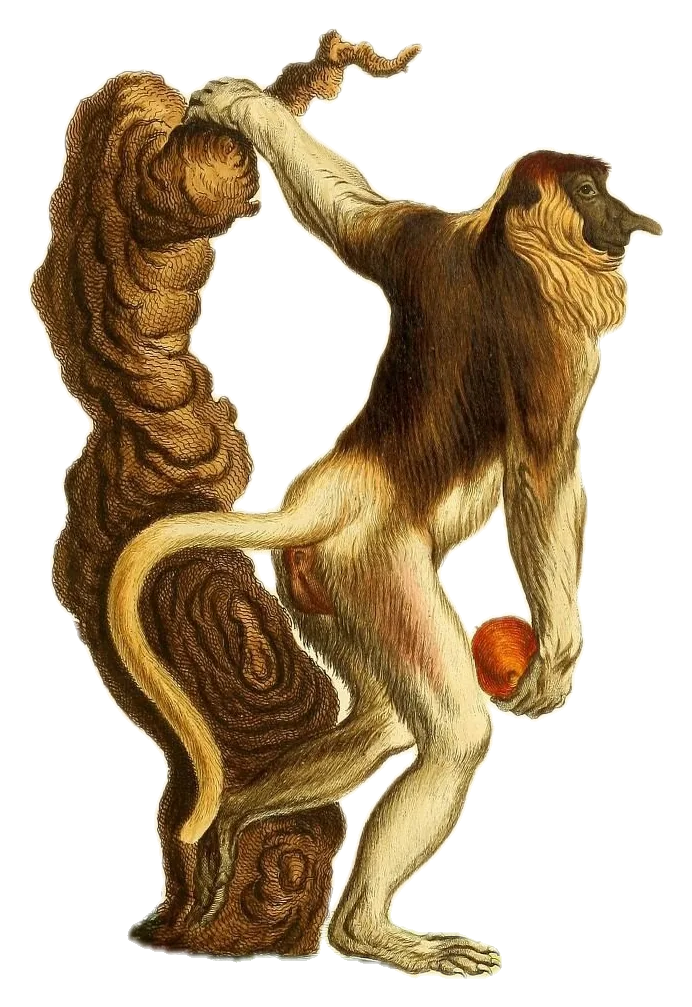
Pl. XVII Proboscis monkey. All nose, climbing for a fruit.
Pl. XX Red howler. Rust red, and loud about it.
Pl. XXIII King colobus. A long pale mane, reaching out.
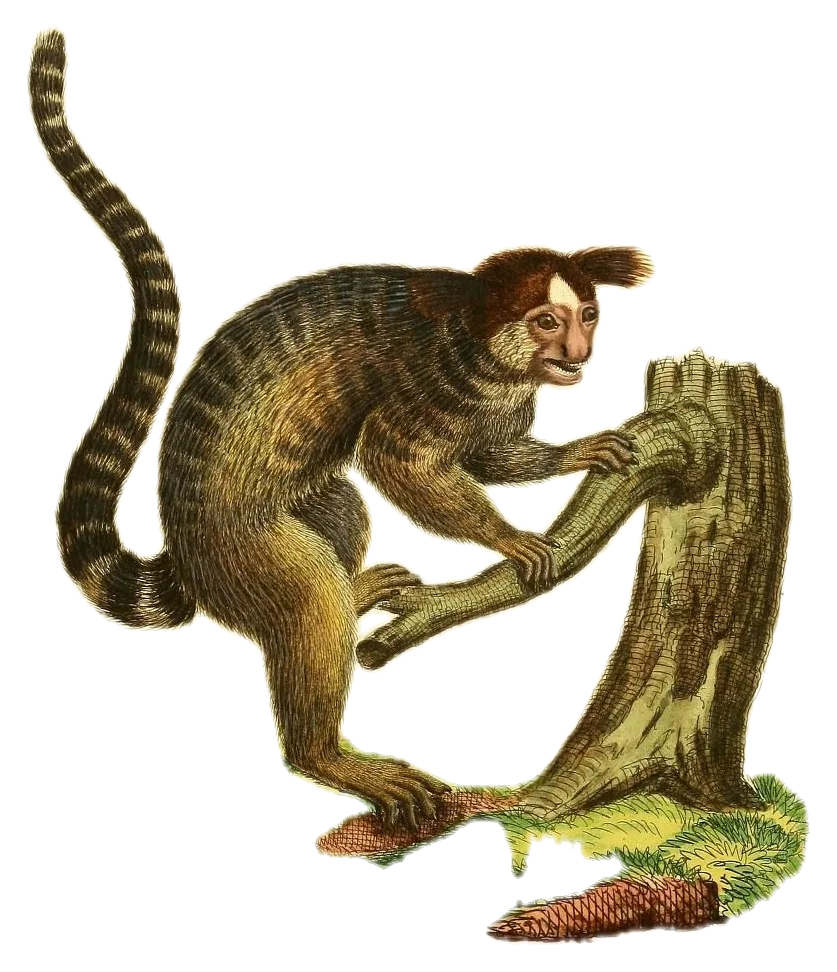
Pl. XXVI Black-tufted marmoset. Ear tufts like paintbrushes.
Pl. XVI Hamadryas baboon. A grey mantle like a judge’s wig.
Pl. XVIII Spot-nosed monkey. A white dot on a black face.

Ideas

Ideas

Short patches of things I keep thinking about, and where the thinking came from.

01 Nov 2026 · 2 min

Never ask me to play “Last Friday Night” and other 2010s anthems

For the first time in my young Halloween history, life handed me its own proverbial trick or treat: Halloween in college, on a Saturday. As you can imagine, a college town like Austin has its status quo completely upended on a weekend like “Hallo-weekend,” with uncertainty and mistakes more abundant than wholesome, costume-clad trick-or-treaters. I was also lucky enough to stumble onto the chance to play my first DJ set. For a while now I’ve been completely enthralled by electronic music. Most people lump all of it together as “techno,” but the sound I loved most, and most wanted to play, was dubstep.

To my dismay, procrastination and a flurry of exams got the best of me, leaving just two days to find songs, practice and, frankly, learn how to DJ. With my trusty companion and co-DJ, I dug up remixes of songs we wanted to hear and bob our heads to, and honestly, we had more fun doing that than playing the set itself (as I’ll explain). The function we were supposed to DJ was at a house in West Campus, which during Hallo-weekend was closer to a battlefield than student housing.

The clock struck twelve, and there I was, having practiced the set over and over from 2 pm to 8 pm that same day. I felt ready, excited and somehow not even a little anxious. This was going to be my moment: my debut as a DJ, and a pioneering night of non-traditional party music that would (in my head) convert everyone to the religion of high-tempo EDM and dubstep.

As we started setting up, we noticed one of our songs hadn’t loaded. Sad as we were, we moved on. “How much can one song matter?” we thought. How wrong we were. One song that didn’t load became two, then three, then four, and when the fifth refused to load onto the controller, I knew this was it. To sweeten my dismay, weak speakers, irritated partygoers and, for some reason, a really well-lit party (like, too well-lit) all worked in harmony to tell me the one thing I dreaded: tonight is not your night.

With my head down, I accepted it. What I felt, though, was a deep-rooted sadness I hadn’t felt in a long time. I kept trying to rationalize it: “It was a small party.” “No one even cared.” “No one noticed.” “There will always be other opportunities.” But underneath, the regret wasn’t about the attention I’d missed out on. It was that I never got to hear the music I wanted to hear at that party. Even the thought of listening to anyone else’s music at any other function made me sick to my stomach. And with that, a strange sense of pride came over me: I had never loved something this much.

24 Oct 2026 · 1 min

Money doesn’t move

When you pay a friend $20, nothing travels. No coin leaves your bank and lands in theirs. Your bank writes −20 in its notebook, their bank writes +20 in theirs, and the payment is the moment both notebooks agree to change together. Once I saw it this way, most of the payments world made more sense. Clearing houses, central-bank accounts, the two days a transfer “takes”: they all exist to make that agreement safe. Who keeps the notebooks? Who checks them? What happens if one changes and the other doesn’t? That last case has a name, settlement risk, and a surprising amount of plumbing is there just to shrink it. It also changes the question I ask about AI agents. The interesting part isn’t how an agent moves money, because nothing moves. It’s whose notebook the agent is allowed to write in, how much, and who signs off when it does.

References: Perry Mehrling, The New Lombard Street (2011)

19 Oct 2026 · 1 min

Everyone knows that everyone knows

There’s a difference between everyone knowing something and everyone knowing that everyone knows it. The first is shared knowledge. The second, stacked all the way up, is common knowledge, and it changes how people act. Picture a crowd where every person has privately noticed the emperor has no clothes. Nothing happens. Then a child says it out loud. Nobody learned anything new about the emperor, but now each person knows that everyone else knows, and the whole crowd can laugh at once. David Lewis used this idea to explain conventions, like which side of the road we drive on. Robert Aumann showed that two rational people who start from the same prior beliefs, and whose opinions are common knowledge, can’t “agree to disagree”. I keep seeing it in markets and in group chats. A lot of coordination isn’t about information at all. It’s about the moment information becomes public.

References: David Lewis, Convention (1969); Robert Aumann, “Agreeing to Disagree” (1976)

08 Oct 2026 · 1 min

Agents can’t swipe cards

Everyone wants an AI agent that books the flight, pays the deposit and handles it all without asking. Everyone also wants the agent to never hold their money. Right now you can’t fully have both. Card payments were built for a person at a checkout: someone present, a card number, fraud checks that assume a human is clicking. An agent breaks each of those assumptions. So today the choice is awkward. Either the agent gets real payment details and the risk that comes with them, or a human approves every step, which defeats the point. Newer protocols try to split the difference. Google’s Agent Payments Protocol has the user sign a “mandate” saying what the agent may buy, and Coinbase’s x402 lets an agent pay inside a normal web request. The question I keep coming back to is about permission, not plumbing: how do you prove what a person actually agreed to, after the fact?

References: Google, Agent Payments Protocol (AP2); Coinbase, x402